

Data Management Systems
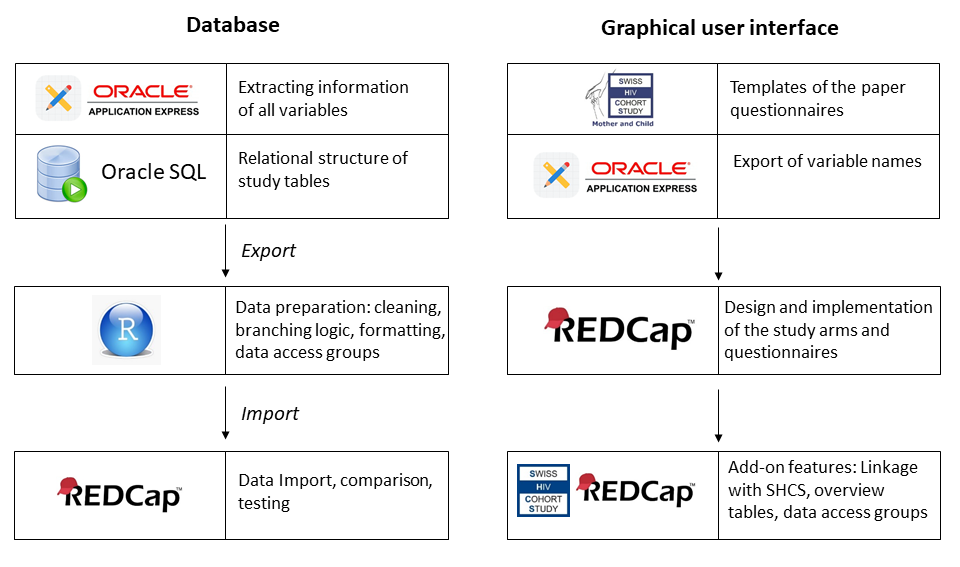
An efficient database system and robust data collection tools are fundamental for conducting high-quality research. These systems enable researchers to systematically gather, store, and manage large volumes of complex data over extended periods. Efficient electronic data collection ensures real-time entry, reduces errors, and supports seamless integration of clinical, behavioural, and laboratory data. Harmonizing data from various sources – such as cohort studies, clinical trials, and surveillance systems – is critical for collaborative efforts and meta-analyses. However, despite the centrality of these tools, there is little standardization in data formats, collection protocols, and integration pipelines across institutions. Establishing clear, interoperable data standards and building scalable, secure databases with modular pipelines is essential. In one project, entitled “Migrating a Well-Established Longitudinal Cohort Database From Oracle SQL to Research Electronic Data Entry (REDCap): Data Management Research and Design Study”, we established such an interoperable solution for the Swiss Mother and Child HIV Cohort Study (see Figure) by setting up a new backend as well as user-friendly frontend for future electronic data collection.
Figure: Schematic presentation of the transfer of the database (left) and graphical user interface (right) for the Swiss Mother and Child HIV Cohort Study.
Our group had the central role in developing several database solutions:
- Developing and testing a Corona VaccinE tRiAL pLatform (COVERALL) to study Covid-19 vaccine response in immunocompromised patients
- Migrating a Well-Established Longitudinal Cohort Database From Oracle SQL to Research Electronic Data Entry (REDCap): Data Management Research and Design Study
- Collaborative Challenges of Multi-Cohort Projects in Pharmacogenetics—Why Time Is Essential for Meaningful Collaborations
