

Coinfections and Comorbidities
People with HIV on antiretroviral therapy are experiencing longer life expectancies, often approaching those of the general population. However, the aging population of people with HIV now faces new health challenges, particularly in the form of comorbidities and co-infections. Chronic conditions such as cardiovascular disease, diabetes, kidney disease, liver disease (often linked to hepatitis B or C co-infection), and certain cancers occur more frequently and at younger ages in people with HIV compared to HIV-negative individuals. This is due to a combination of factors including chronic immune activation, inflammation, long-term ART exposure, and lifestyle risks. Co-infections like tuberculosis (TB) and hepatitis remain major global concerns, especially in low- and middle-income countries where they contribute significantly to HIV-related morbidity and mortality. Understanding and managing these overlapping health issues requires a comprehensive, integrated approach to care.
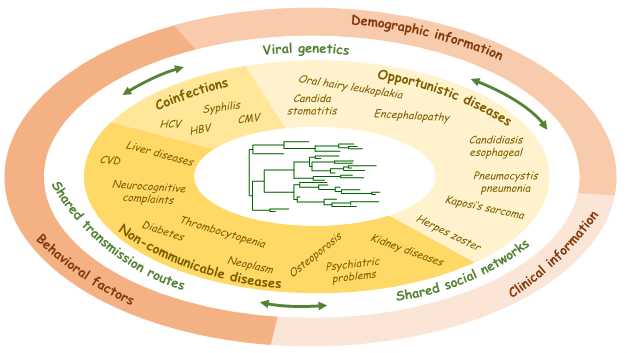
In one project, entitled “A Systematic Phylogenetic Approach to Study the Interaction of HIV-1 With Coinfections, Noncommunicable Diseases, and Opportunistic Diseases” we systematically investigated the viral genetic impact on comorbidities and co-infections, thereby also taking into account several demographic, clinical, and behavioural factors (see Figure).
Figure: The complex interplay of HIV-1 With Coinfections, Noncommunicable Diseases, and Opportunistic Diseases
Our group has a strong research focus towards understanding these complex aspects of the HIV epidemic, projects include the following:
- Time Trends in Causes of Death in People With HIV: Insights From the Swiss HIV Cohort Study
- Diagnosis of latent tuberculosis infection is associated with reduced HIV viral load and lower risk for opportunistic infections in people living with HIV
- Infectious disease events in people with HIV receiving kidney transplantation: Analysis of the Swiss HIV Cohort Study and the Swiss Transplant Cohort Study
- Sustained Effect on Hepatitis C Elimination Among Men Who Have Sex With Men in the Swiss HIV Cohort Study: A Systematic Re-Screening for Hepatitis C RNA Two Years Following a Nation-Wide Elimination Program
- Self-reported Neurocognitive Impairment in People Living With Human Immunodeficiency Virus (HIV): Characterizing Clusters of Patients With Similar Changes in Self-reported Neurocognitive Impairment, 2013–2017, in the Swiss HIV Cohort Study
- A Systematic Phylogenetic Approach to Study the Interaction of HIV-1 With Coinfections, Noncommunicable Diseases, and Opportunistic Diseases
