

Sexual Behaviour
The introduction of antiretroviral therapy (ART) was a tremendous success, transforming HIV from a deadly to a chronic condition. ART suppresses the virus within a patient and with this has two major benefits: First, the person with HIV will not progress towards AIDS and can live with HIV with a life expectancy similar to people without HIV. Second, with the virus being suppressed, HIV cannot be onwards transmitted – the so-called «0 equals 0» statement (undetectable HIV viral load means no risk for transmission). Further, ART used as HIV pre-exposure prophylaxis (PrEP) was shown successful in preventing new HIV infections.
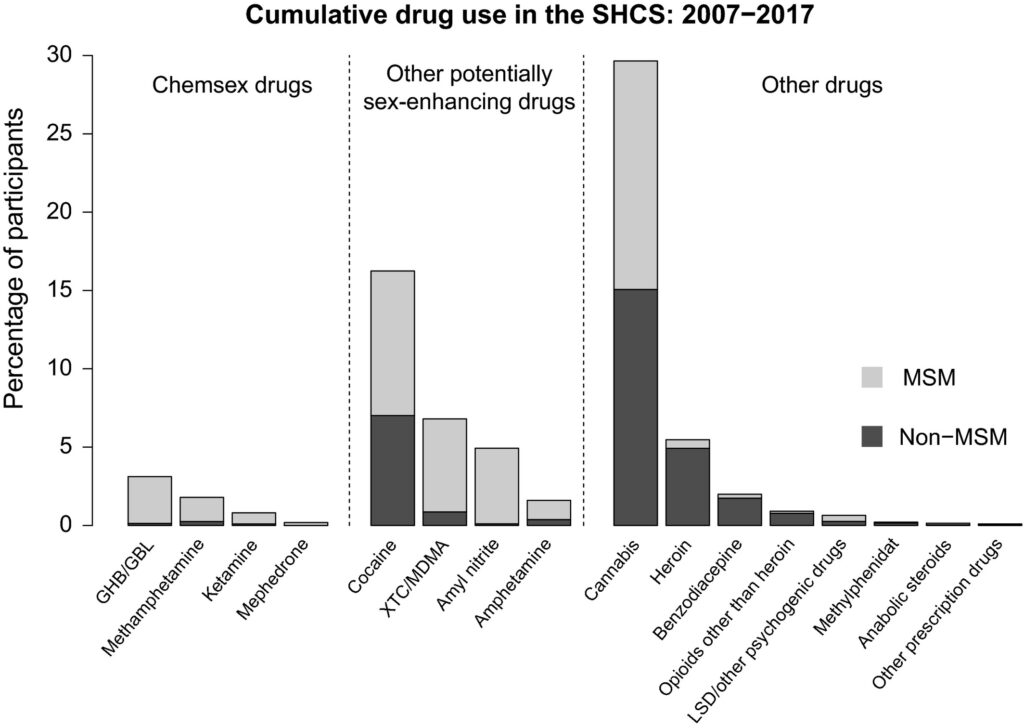
These changes have also influenced sexual behaviour: A strong increase in sexually transmitted infections (STIs) other than HIV, was observed in the past decade, explained partly by a decrease in condom use. In addition, several European countries including Switzerland have reported a concerning increase of sexualized drug use, termed ‘chemsex’, i.e., the use of recreational drugs in a sexualized context. Our group did an in-depth analysis of these new trends (see Figure). It is unclear to what extent these dynamics influence HIV transmission in this new era of effective HIV treatment and chemoprophylaxis.
Figure: Percentage of Swiss HIV Cohort Study participants using recreational drugs
Further projects or collaborations include the following:
- Chemsex drugs on the rise: a longitudinal analysis of the Swiss HIV Cohort Study from 2007 to 2017
- Incidence of sexually transmitted infections and association with behavioural factors: Time-to-event analysis of a large pre-exposure prophylaxis (PrEP) cohort
- Phylogenetic Cluster Analysis Identifies Virological and Behavioral Drivers of Human Immunodeficiency Virus Transmission in Men Who Have Sex With Men
