

Care Cascade
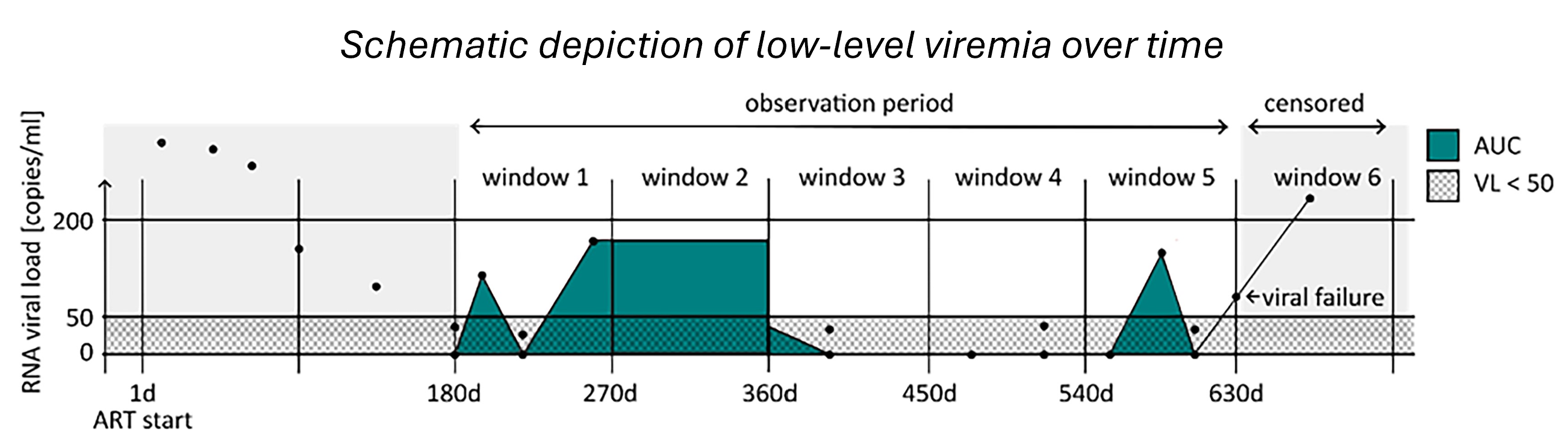
Antiretroviral therapy (ART), the cornerstone of HIV treatment, effectively suppresses the virus in the vast majority of people. As a result, people with HIV have a life expectancy comparable to the HIV-uninfected population, with population-level benefits due to disruption of transmission chains. However, an HIV infection remains to be a chronic condition and requires continuous treatment, hence sustained engagement in care is essential. Additionally, low-level viremia—where the virus remains detectable at low levels despite therapy—can complicate clinical management and long-term outcomes. Here, our group implemented a longitudinal analysis to this phenomenon better. In the project “Human Immunodeficiency Virus 1 Low-Level Viremia Predicts Viral Failure in Participants on Antiretroviral Therapy in the Swiss HIV Cohort Study” could show that indeed, low-level viremia leads to subsequent viral failure. Here, we employed a time-updated analysis of the area under the viral load measurements (see Figure).
Figure: Understanding low-level viremia over time
Another concern is the emergence of drug-resistant strains of HIV, which can limit treatment options and require more complex regimens. Social and structural barriers such as stigma, discrimination, and healthcare inequities further exacerbate these challenges.
Our group investigates several aspects of treatment success, such as:
- HIV-1 Low-Level Viremia Predicts Viral Failure in Participants on Antiretroviral Therapy in the Swiss HIV Cohort Study
- Late Re-Engagement Into HIV Care Among Adults in the Swiss HIV Cohort Study
- HIV-1 drug resistance in people on dolutegravir-based antiretroviral therapy: a collaborative cohort analysis
